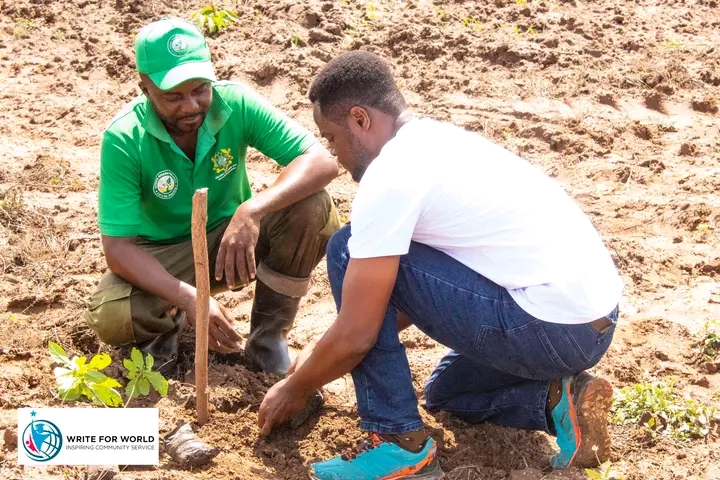
The Have Ando community in the Afadzato South District has long depended on farming—particularly cassava dough production—as its primary source of livelihood. However, decades of unsustainable practices such as rampant deforestation, annual bushfires, illegal logging, and continuous overuse of the same lands have left the environment severely degraded. This degradation has disrupted the ecological balance, reduced flora diversity, and diminished the potential for honey production.
In March 2026, with support from the UNDP COMDEKS Small Grants Programme, the community embarked on a transformative journey to restore 10 acres of degraded land. Through the establishment of fast growing timber plantations and beekeeping initiatives, the project aims to strengthen youth and women’s livelihoods while reviving the local ecosystem.
During the first quarter, significant progress was achieved. Nursery shades were constructed, and 3,000 seedlings were procured, with 2,000 already transplanted and the remainder scheduled for the next planting cycle. Training sessions introduced participants to nursery establishment, seedling sourcing, pegging, plantation management, gap filling, and wildfire prevention. Alongside this, 100 beehives were procured to support youth and women in developing alternative income streams, and participants were introduced to modern beekeeping techniques and honey production practices. The project has already seen strong community acceptance, with 53 participants trained in both theoretical and practical aspects of forestry management, supported by effective collaboration with forestry experts.
Looking ahead to the next quarter (July–October 2026), the project team will intensify field activities. Participation will be expanded to reach the target of 60 members, ensuring that half are women. Apiaries will be established alongside tree planting, and advanced training will be delivered in apiary management, forestry nursery techniques, business development, and value addition for honey and timber products.
The anticipated impact of this initiative is far reaching. Ecological restoration will reverse land degradation, restore vegetation cover, and revive biodiversity. Livelihood diversification will provide reliable and sustainable income streams for youth and women through honey production and timber. Strong community ownership will ensure continuity and resilience, while capacity building will empower participants with practical skills in forestry and beekeeping, fostering long term stewardship of natural resources.
The Have Ando restoration project has already laid a solid foundation for ecological recovery and livelihood diversification. With continued support and community dedication, this initiative promises to deliver lasting environmental and socio economic benefits to the Afadzato South District, planting hope for generations to come.